


Last Updated on February 20, 2026 by admin
UN Pushes for IPCC-Style Global AI Panel as António Guterres Calls for “Less Hype, Less Fear”
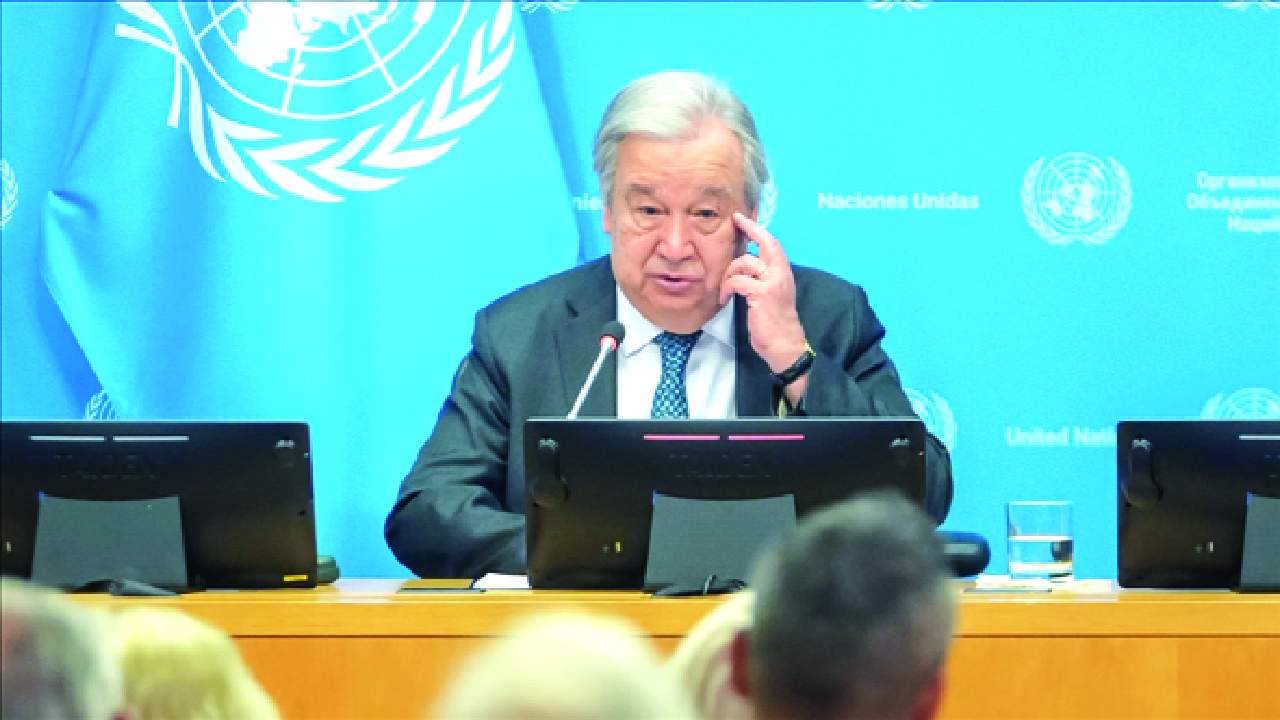
Artificial intelligence has moved from research labs into everyday life at a pace that has stunned policymakers. As governments struggle to keep up, global leaders are beginning to push for coordinated oversight. At the AI Impact Summit, United Nations Secretary-General António Guterres called for a measured approach to artificial intelligence—urging the world to dial down both exaggerated optimism and excessive alarm.
His central message was clear: the world needs structured, science-based global cooperation on AI governance, similar to the model used for climate change.
Why the UN Is Stepping Into AI Governance
AI technologies—especially generative systems capable of producing text, images, and code—are reshaping economies and societies. From healthcare diagnostics to automated content generation, the opportunities are vast. However, so are the risks: misinformation, job displacement, surveillance misuse, and potential loss of human oversight.
At the summit, Guterres emphasized that the global conversation around AI has been polarized. On one side, there is intense hype promising transformative economic growth and productivity gains. On the other, fears of existential threats and runaway systems dominate headlines.
His appeal for “less hype, less fear” reflects the need for evidence-based policymaking rather than reactionary regulation or unchecked enthusiasm.
The Case for an IPCC-Style AI Panel
One of the most significant proposals put forward was the creation of a global AI body modeled on the Intergovernmental Panel on Climate Change.
What Would an IPCC-Style AI Panel Do?
The climate-focused IPCC has long provided governments with rigorous, peer-reviewed scientific assessments that guide global climate policy. Guterres believes AI governance requires a similar approach.
An AI-focused panel would:
- Aggregate global research on AI’s capabilities and risks
- Provide independent, science-based assessments
- Offer policy recommendations grounded in consensus
- Create shared standards across nations
- Strengthen trust between governments, researchers, and industry
Rather than enforcing laws directly, such a panel would function as a knowledge authority, helping policymakers make informed decisions.
Why Global Coordination Is Critical
Unlike climate change, which unfolds over decades, AI development moves at lightning speed. Systems are updated within weeks, and new models emerge rapidly. National regulations alone may prove insufficient when AI companies operate across borders.
Guterres argued that fragmented regulatory systems risk:
- Creating loopholes for misuse
- Triggering competitive “race to the bottom” dynamics
- Slowing down responsible innovation
- Widening the gap between developed and developing nations
A unified global framework could reduce duplication, harmonize standards, and ensure that AI benefits are shared more equitably.
Human Control as a Core Principle
A central theme in Guterres’ address was maintaining human oversight over artificial intelligence systems. The idea of “human control” goes beyond simply having a person in the loop. It implies:
- Clear accountability structures
- Transparent decision-making processes
- Ethical guardrails embedded in design
- Regulatory mechanisms to intervene when necessary
The UN chief stressed that AI must remain a tool serving humanity—not a system operating beyond democratic or ethical control.
This principle resonates particularly in high-stakes areas such as:
- Autonomous weapons
- Critical infrastructure management
- Financial systems
- Healthcare diagnostics
Ensuring that humans retain ultimate authority is increasingly viewed as non-negotiable in global policy discussions.
Moving Beyond Fear-Driven Narratives
Public discourse around AI has often oscillated between utopian and dystopian extremes. Some tech leaders warn of existential threats, while others predict unprecedented economic growth.
Guterres cautioned against both narratives.
The Risks of Excessive Hype
Overstating AI’s immediate capabilities can:
- Mislead investors and policymakers
- Create unrealistic public expectations
- Encourage reckless deployment
- Distract from real, present-day challenges
The Risks of Excessive Fear
At the same time, alarmist messaging can:
- Stall innovation
- Fuel public mistrust
- Encourage heavy-handed regulation
- Marginalize smaller economies from participating in AI development
The balanced approach advocated by the UN seeks to foster responsible innovation while mitigating harm.
AI and Global Inequality
Another key issue raised at the summit was the potential for AI to deepen global inequality.
Wealthier nations and major technology companies dominate AI research and infrastructure. Without inclusive governance mechanisms, developing countries risk becoming passive consumers rather than active contributors to AI innovation.
An international AI panel could:
- Provide shared research access
- Support capacity-building initiatives
- Promote equitable technology transfer
- Encourage multilingual and culturally diverse AI systems
Guterres highlighted the importance of ensuring that AI serves all humanity—not just a handful of corporations or advanced economies.
Learning From Climate Governance
The proposal for an AI panel takes inspiration from decades of climate governance under the IPCC framework. While climate negotiations remain complex, the IPCC’s scientific authority has been instrumental in shaping global agreements.
Key lessons that could apply to AI include:
- The value of peer-reviewed global assessments
- Transparency in methodology
- Multi-stakeholder collaboration
- Separation of scientific evaluation from political negotiation
However, AI governance presents unique challenges. Technological cycles move faster than climate systems, meaning assessment frameworks must adapt quickly to remain relevant.
Industry’s Role in AI Oversight
While governments and international bodies can set frameworks, much of AI innovation originates in the private sector.
The AI Impact Summit highlighted the need for cooperation between:
- Technology companies
- Academic researchers
- Civil society organizations
- National regulators
- Multilateral institutions
Voluntary commitments from companies may help bridge the gap until formal global agreements are established. Transparency reports, independent audits, and shared safety research are potential steps forward.
The Road Ahead for Global AI Governance
The concept of a UN AI governance panel is still in development. Establishing such a body would require:
- Agreement among UN member states
- Clear mandates and funding mechanisms
- Inclusion of technical experts
- Safeguards against politicization
Despite these challenges, momentum for coordinated AI governance is growing. Governments in Europe, North America, and Asia are drafting regulatory frameworks, while global forums increasingly feature AI as a central topic.
Potential Outcomes of a UN AI Panel
If successfully implemented, a global AI panel could:
- Standardize risk assessment practices
- Reduce regulatory fragmentation
- Strengthen global trust
- Improve safety standards
- Accelerate responsible innovation
However, failure to coordinate could result in uneven safeguards and escalating geopolitical tensions around AI dominance.
Balancing Innovation and Regulation
One of the enduring tensions in AI governance is finding the right balance between fostering innovation and protecting society.
Overregulation risks slowing progress and driving research underground. Underregulation, meanwhile, may allow harmful applications to proliferate.
Guterres’ remarks signal that the UN aims to position itself as a neutral platform—facilitating dialogue rather than imposing rigid controls.
The goal is not to stifle AI development, but to ensure that its trajectory aligns with global values such as:
- Human rights
- Equity
- Transparency
- Accountability
Why This Moment Matters
AI is reaching an inflection point. Generative tools are embedded in workplaces, educational systems, and media platforms. Decisions made now will shape the technological landscape for decades.
The proposal for an IPCC-style AI panel reflects a broader recognition: AI is no longer just a technical issue. It is a geopolitical, economic, and ethical challenge requiring global collaboration.
By advocating for “less hype, less fear,” Guterres is attempting to reframe the debate—encouraging pragmatic governance rooted in evidence and cooperation.
A Global Framework for a Global Technology
Artificial intelligence does not recognize national borders. Its impacts ripple across economies and societies worldwide. The call for a UN AI governance panel signals an effort to move beyond fragmented policymaking toward a structured, science-based global response.
Whether the international community can reach consensus remains uncertain. But one thing is clear: the future of AI governance will depend on cooperation, transparency, and a commitment to keeping humans firmly in control.
As the world grapples with rapid technological change, the question is not whether AI should be governed—but how, and by whom. The UN’s proposed panel may become a cornerstone of that answer.