


NASA is preparing to send humans around the Moon again with the Artemis II mission—but what makes this journey truly remarkable is not just the spacecraft or the crew. It’s the carefully designed trajectory that ensures astronauts can travel deep into space and safely return to Earth. This path, known as a free-return trajectory, is one of the most important engineering decisions behind the mission.
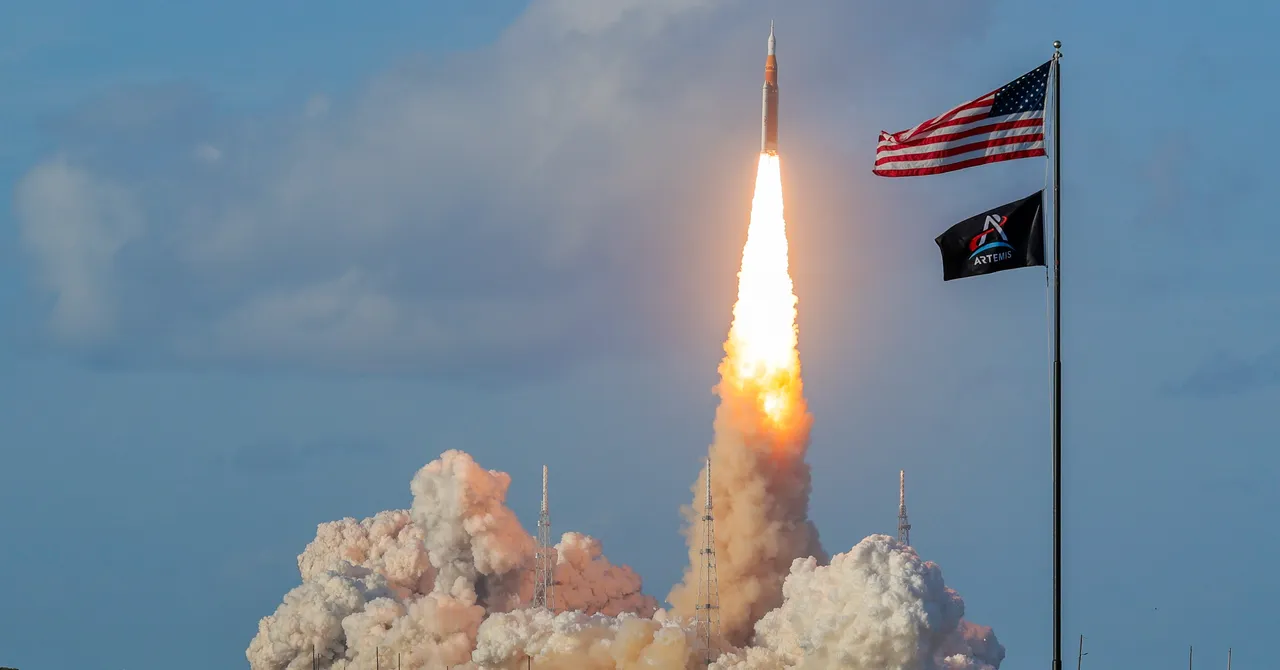
Liftoff. At 6:35 pm ET on April 2, a Space Launch System rocket lifted an Orion capsule from Earth. On board were Artemis II astronauts Reid Wiseman, Victor Glover, Christina Koch, and Jeremy Hansen. As of Thursday, they became the first humans to go beyond low Earth orbit since the Apollo 17 mission in 1972.
The crew will test technological systems that will be useful on subsequent missions, such as those involving radiation shielding or communication between the capsule and Earth at lunar distances. One of the most fascinating aspects is also the trajectory that Artemis II will follow during its mission.
Explore More Science Stories on TechKip
Why Artemis II Is Historic
Artemis II will send astronauts farther from Earth than any mission since the Apollo era, marking humanity’s return to deep space after more than 50 years.
The Artemis II mission is expected to last around 10 days, with astronauts traveling thousands of kilometers beyond the Moon before returning to Earth.
What is Artemis II trajectory?
Artemis II trajectory is a free-return flight path that takes astronauts around the Moon and safely back to Earth using gravity.
What Is a Free-Return Trajectory?
A free-return trajectory is a flight path that allows a spacecraft to travel around the Moon and return to Earth without requiring major engine burns on the way back.
In simple terms, it works like a cosmic slingshot. The spacecraft is pulled by Earth’s gravity, then redirected by the Moon’s gravity, naturally looping back toward Earth. This design acts as a built-in safety system—if anything goes wrong, the spacecraft can still return home without complex corrections.
Space Is the Place
Contrary to what intuition may suggest, the journey to the moon is not a direct, linear path connecting the Earth’s surface with the lunar surface.
After launch, the first stage of the SLS separated from the rest of the spacecraft—the Interim Cryogenic Propulsion Stage (ICPS) upper stage and the Orion capsule. The ICPS carried the capsule into high Earth orbit, but the crew remained orbiting Earth for approximately 23 hours. After all the checks and verification that everything was in order, the ICPS separated from the Orion. That’s when the journey to the moon truly began.

Courtesy of NASA
The Lunar Flyover
The halfway point will occur on the evening of April 6. The Artemis II astronauts will travel approximately 10,300 kilometers beyond the moon, shattering all previous records for distance from Earth. The current record holder is the Apollo 13 mission, which reached approximately 400 kilometers beyond the moon.
The closest approach by Artemis II to the lunar surface will be 7,400 kilometers, which will be reached during the flyby of the far side. The spacecraft will not enter orbit around the moon but will fly past it and use a gravitational slingshot to return to Earth. The result is a figure-eight trajectory between the two celestial bodies. The orbit is optimized to ensure reentry to Earth, even in the event of engine failure.
Step-by-Step: How Artemis II Travels Around the Moon
Here’s how the Artemis II mission will unfold:
- Launch from Earth: The Orion spacecraft launches aboard NASA’s Space Launch System (SLS).
- Translunar Injection: A powerful engine burn sends Orion toward the Moon.
- Lunar Flyby: The spacecraft swings around the Moon, reaching thousands of kilometers beyond its surface.
- Return Path: Using the Moon’s gravity, Orion is redirected back toward Earth.
- Re-entry: The spacecraft re-enters Earth’s atmosphere and lands safely in the ocean.
This entire journey forms a looping path often described as a “figure-eight” trajectory.
Why This Trajectory Matters
The trajectory used in Artemis II is not just efficient—it’s essential for mission success.
- Safety First: Provides a natural return path in case of emergencies
- Fuel Efficiency: Reduces the need for large fuel reserves
- Proven Method: Similar paths were used in historic Apollo missions
- Future Missions: Helps test systems for deeper space exploration, including Mars
This balance of safety and efficiency is what makes the trajectory such a critical part of the mission.
Artemis II vs Apollo: What’s Different?
While Artemis II builds on the legacy of Apollo missions, there are key differences:
- Artemis II will travel farther from Earth than Apollo 8
- Modern navigation and computing systems improve precision
- Orion spacecraft includes advanced life-support and safety systems
- Mission goals now focus on long-term lunar exploration
Despite these upgrades, the core idea of using a free-return trajectory remains the same—proving its reliability over decades.
Think of the Artemis II trajectory like throwing a ball around a curved track. Instead of going straight, the ball curves around and comes back to you. In space, gravity plays the role of that curved track, guiding the spacecraft along its path.
The Reentry to Earth
Reentry will take place via a passive trajectory: After flying over the moon, Orion will essentially be in free fall toward Earth, without needing to use its engines. If there are problems with the propulsion or other systems, the capsule will return safely to Earth.

Photograph: Mario Tama/Getty Images
Reentry will take place by ditching in the Pacific Ocean on April 11, 9 days and 13 hours after the mission launch. There the astronauts will be recovered by the US Navy, thus concluding their journey home.
Artemis II is more than just a mission—it’s a test of humanity’s ability to return to deep space. And at the heart of it all is a trajectory so precise that it can bring astronauts home using nothing but gravity.
Frequently Asked Questions
Artemis II is NASA’s first crewed mission in the Artemis program, designed to send astronauts around the Moon and back.
No, Artemis II is a flyby mission. The first planned lunar landing will happen in a later mission.
The mission is expected to last around 10 days.
It ensures the spacecraft can safely return to Earth while using minimal fuel.
Source