


Last Updated on April 13, 2026 by admin
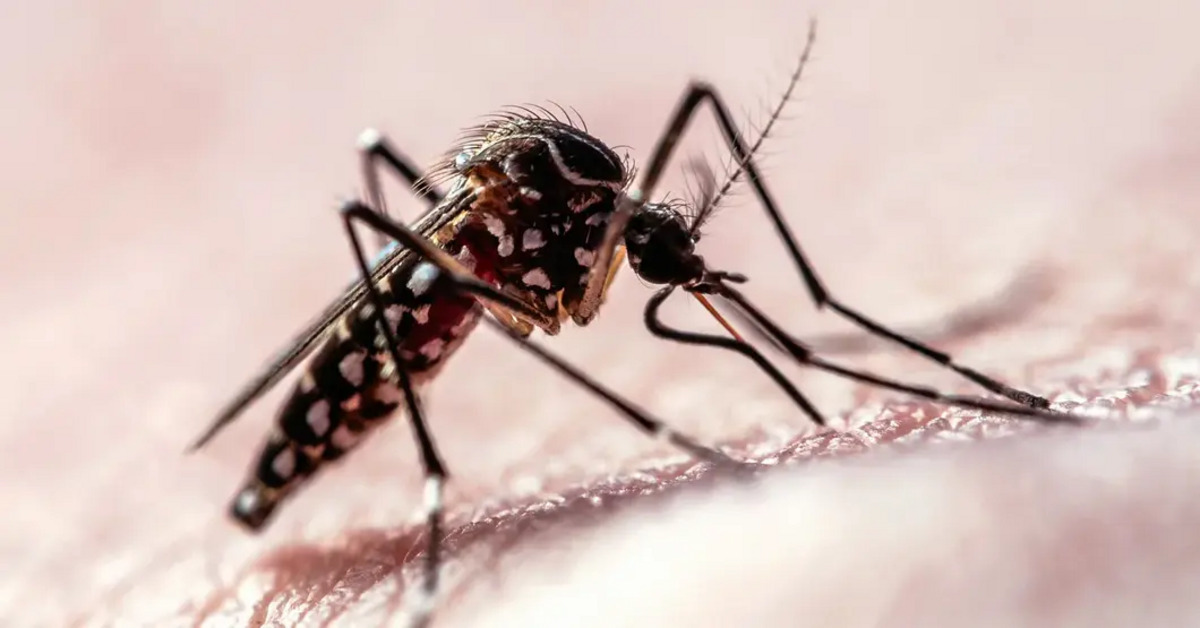
Scientists have uncovered one of the most detailed explanations yet of how mosquitoes locate and target humans, revealing that the insects rely on a sophisticated combination of visual signals and carbon dioxide detection to home in on their victims.
The findings come from a large-scale study that tracked mosquito flight paths in unprecedented detail, offering new insight into how these disease-carrying insects navigate toward humans with remarkable accuracy. The research could play a crucial role in improving mosquito control strategies and reducing the spread of deadly diseases such as malaria, dengue, and Zika.
This discovery was first reported in a detailed scientific feature analyzing mosquito flight behavior.
Explore more breakthroughs in biological and environmental research in our science section.
Breakthrough Study Tracks Millions of Mosquito Movements
Researchers from leading institutions used high-resolution motion tracking systems to observe how female mosquitoes behave when exposed to human subjects under controlled conditions.
In total, scientists analyzed millions of data points from thousands of mosquito flight trajectories, capturing movement patterns in fractions of a second. This allowed them to build a precise model of mosquito behavior in response to human-related stimuli.
What they discovered challenges earlier assumptions: mosquitoes do not simply fly randomly or follow scent alone. Instead, they dynamically adjust their movement based on a combination of sight and smell-based cues.
According to the study, mosquitoes exhibit distinct behavioral states—alternating between active searching and slower, more targeted movement when they detect potential hosts.
Why Mosquitoes Prefer Human Bodies and Heads
One of the most striking observations was that mosquitoes consistently gravitate toward the upper body, particularly the head region.
Researchers found that this is not accidental. The human head naturally produces a strong combination of attractants:
- Higher concentrations of carbon dioxide exhalation
- Distinct visual contrast compared to surroundings (shape and movement)
- Body heat and odor signals
When these cues overlap, mosquitoes become significantly more focused and begin circling closer to the target rather than moving randomly.
The study suggests that mosquitoes do not rely on a single signal. Instead, they integrate multiple sensory inputs to “confirm” the presence of a human host before landing.
Learn more about public health research and biological discoveries in our science section.
The Role of Carbon Dioxide in Targeting Humans
Carbon dioxide (CO₂) plays a key role in long-distance mosquito attraction.
When mosquitoes detect CO₂ in the environment, it acts like an initial signal that a potential host is nearby. However, CO₂ alone is not enough to trigger landing behavior.
Instead, it works as a navigation trigger, guiding mosquitoes toward the general area where humans are present. Once closer, they switch to other cues such as:
- Body shape recognition
- Movement patterns
- Heat signatures
- Skin odors
This multi-stage detection system explains why mosquitoes can still find humans even in low-light or crowded environments.
Vision and Smell Work Together — Not Separately
A key breakthrough from the research is that mosquito behavior cannot be explained by a single sense.
Instead, mosquitoes combine:
1. Visual cues
Dark objects and silhouettes attract mosquitoes, especially in contrast-rich environments.
2. Chemical cues
CO₂ and human odor act as long-range detection signals.
3. Behavioral switching
Once close enough, mosquitoes change flight behavior and begin circling targets more tightly.
This interaction creates a layered decision-making system that allows mosquitoes to efficiently locate humans even in complex environments.
Why This Discovery Matters for Disease Control
Mosquitoes are responsible for transmitting diseases that kill hundreds of thousands of people globally every year. Understanding how they locate humans is a major step toward improving prevention strategies.
This research could help scientists design:
- More effective mosquito traps using combined visual + CO₂ lures
- Better repellents that disrupt sensory integration
- Smart environmental designs that reduce mosquito attraction
Instead of relying on single-attractant traps, future systems may need to mimic the full sensory profile of humans to be effective.
A New Model of Mosquito Behavior
The researchers also developed a mathematical model that predicts mosquito flight patterns based on environmental inputs.
This model successfully replicates real-world mosquito behavior and shows that insects respond in predictable ways when exposed to combinations of stimuli.
One of the key insights is that mosquito flight is not random—it follows structured decision rules influenced by sensory feedback loops.
This means mosquitoes are far more “adaptive” in their behavior than previously understood.
Entomology research continues to reveal how insect behavior influences disease transmission.
Discover how AI and computational models are transforming scientific research in our technology section.
Global Impact on Public Health Strategies
The implications of this research extend beyond laboratory science.
Mosquito-borne diseases remain a major global health challenge, especially in tropical and subtropical regions. Improving mosquito targeting models could directly impact:
- Urban pest control programs
- Disease outbreak prevention strategies
- Design of protective housing and nets
- Development of next-generation repellents
Experts believe this research could reshape how governments and health organizations approach mosquito control in the future.
Global health data from WHO highlights the severe impact of mosquito-borne diseases worldwide.
Conclusion: A Smarter Understanding of a Deadly Insect
The latest findings reveal that mosquitoes are not simple pests acting on instinct alone—they are highly responsive organisms that integrate multiple environmental signals to locate humans with precision.
By decoding how mosquitoes process visual and chemical cues, scientists are now closer than ever to disrupting their ability to find human hosts.
While more research is needed, this discovery represents a major step forward in the global fight against mosquito-borne diseases.
Stay updated with the latest science and tech breakthroughs on our homepage.