


Last Updated on February 23, 2026 by Michael Motha
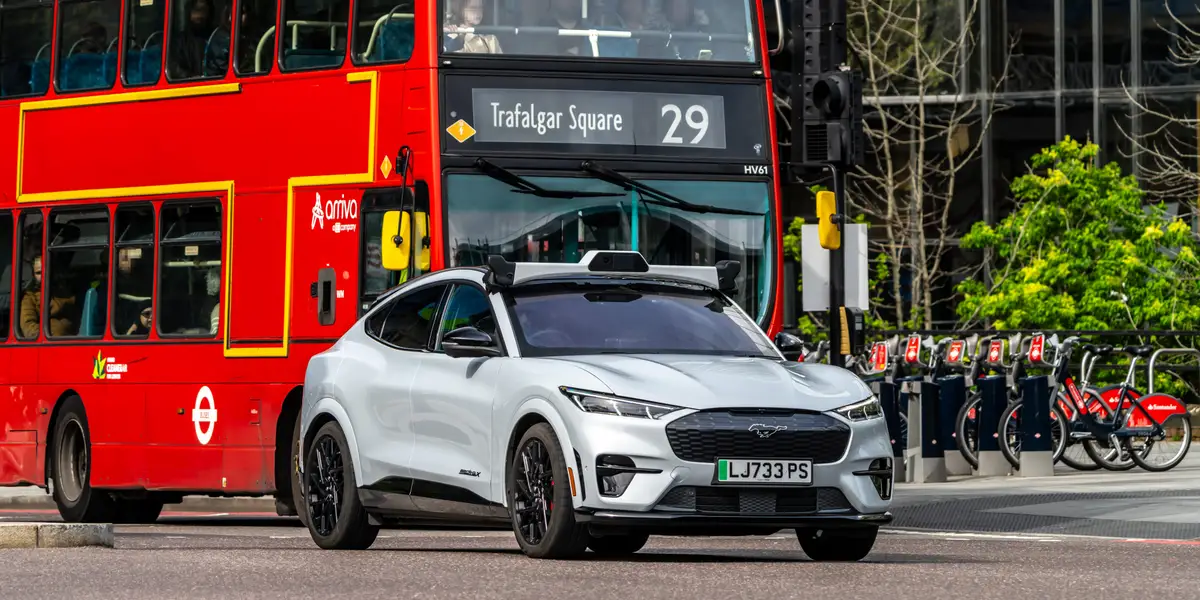
London, a city synonymous with its iconic black cabs and deeply rooted transport traditions, is preparing for a dramatic shift. Autonomous robotaxis are edging closer to operating on its historic streets, signaling a new chapter in urban mobility. Yet as tech companies and policymakers push forward, many of the city’s seasoned black cab drivers remain unconvinced.
The tension reflects more than a clash between old and new. It represents a broader debate about technology, employment, safety, and the future of city transport in one of the world’s most complex driving environments.
London’s Road to Autonomous Mobility
The UK government has signaled strong support for autonomous vehicle development, framing it as an opportunity to boost innovation, attract investment, and improve transportation efficiency. Officials view the rollout of self-driving taxis as a milestone in the country’s ambition to become a leader in AI-driven mobility.
Robotaxis—fully autonomous vehicles that operate without a human driver—are already being tested in controlled environments. Technology firms developing these systems claim their vehicles rely on a combination of sensors, cameras, radar, and artificial intelligence to interpret road conditions in real time. The promise is compelling: fewer accidents, lower emissions, and round-the-clock availability.
London, with its dense population and high demand for ride-hailing services, presents a potentially lucrative market. However, it is also one of the most challenging cities in the world for drivers, human or machine.
Why London Is a Unique Test Case
Unlike grid-based cities with predictable layouts, London’s roads are a labyrinth. Narrow streets, historic roundabouts, unpredictable pedestrian behavior, cyclists weaving through traffic, and centuries-old infrastructure create a uniquely difficult driving environment.
Black cab drivers undergo rigorous training known as “The Knowledge,” a qualification that requires memorizing tens of thousands of streets and landmarks. Many spend years mastering this exam before earning a license. For them, the suggestion that algorithms can replicate their expertise feels premature.
Drivers argue that no amount of machine learning can fully account for:
- Sudden road closures
- Complex traffic diversions
- Temporary construction zones
- Unwritten driving norms unique to London
Their skepticism stems from lived experience. They have navigated the city through protests, royal events, sporting tournaments, and unpredictable weather. To them, urban driving is as much intuition as instruction.
The Technology Behind Robotaxis
Autonomous vehicles rely on a suite of advanced technologies:
Sensor Fusion and AI Mapping
Robotaxis combine inputs from lidar, cameras, and radar to create a 360-degree view of their surroundings. Artificial intelligence systems process this data in milliseconds to identify obstacles, pedestrians, traffic signals, and road markings.
Continuous Learning Systems
Developers claim that every mile driven improves the system. Data collected during operation feeds back into machine learning models, allowing vehicles to refine their responses over time.
Redundancy and Safety Layers
Multiple backup systems are built into autonomous platforms. If one sensor fails, others compensate. Emergency braking protocols and remote monitoring are also integrated to reduce risk.
Despite these safeguards, critics question whether simulations and controlled pilot programs can fully prepare robotaxis for London’s chaotic reality.
Safety Promises vs. Real-World Concerns
Proponents of robotaxis emphasize safety statistics. Human error is responsible for the vast majority of road accidents. Fatigue, distraction, and impaired driving are persistent risks. Autonomous systems, developers argue, do not get tired or distracted.
However, black cab drivers and transport advocates raise counterpoints:
- Software glitches can have large-scale consequences.
- Edge cases—rare and unpredictable scenarios—are difficult to program for.
- Public trust may erode quickly after even a single high-profile accident.
Trust is central to adoption. Passengers must feel confident stepping into a vehicle without a driver. In a city like London, where taxi drivers often provide assistance, local knowledge, and a sense of security, replacing that human element may not be straightforward.
Economic Impact on Black Cab Drivers
The introduction of robotaxis could reshape London’s transport labor market. Black cab drivers already face competition from ride-hailing platforms. The arrival of driverless fleets adds another layer of disruption.
For many drivers, taxi work is not just a job—it is a profession requiring years of preparation and significant financial investment. Vehicles must meet strict licensing standards, and drivers shoulder operational costs.
Concerns include:
- Reduced demand for traditional taxis
- Lower fares driven by automation
- Loss of livelihoods for thousands of drivers
Industry representatives argue that policymakers must consider transition strategies, retraining programs, and fair regulatory frameworks to avoid disproportionate economic harm.
Regulatory Framework and Government Ambitions
The UK government has laid out plans to enable commercial self-driving services in the coming years. Officials contend that early adoption could position Britain as a global hub for autonomous mobility.
Regulation will play a decisive role in determining how robotaxis integrate into London’s transport ecosystem. Key policy questions include:
- Liability in the event of accidents
- Insurance frameworks for autonomous fleets
- Data privacy and cybersecurity standards
- Licensing requirements for operators
Transport authorities must balance innovation with public safety. Overregulation could stifle growth, while insufficient oversight could undermine public confidence.
Public Perception and Cultural Resistance
London’s black cabs are more than transportation; they are cultural symbols. Tourists often view them as part of the city’s identity, alongside red buses and historic landmarks.
Replacing or overshadowing them with anonymous autonomous vehicles raises emotional as well as economic concerns. For some residents, robotaxis represent progress. For others, they symbolize the erosion of a trusted tradition.
Public opinion may hinge on early experiences. Smooth, reliable service could accelerate acceptance. Conversely, operational hiccups might reinforce skepticism.
Environmental Implications
Autonomous fleets are often electric, aligning with London’s push to reduce emissions and improve air quality. If deployed at scale, robotaxis could contribute to cleaner urban transport.
Potential environmental benefits include:
- Optimized routing to reduce congestion
- Shared mobility reducing private car ownership
- Integration with public transport networks
However, experts caution that increased convenience could also lead to higher overall vehicle usage. If robotaxis encourage more trips rather than replacing existing ones, congestion and emissions gains could diminish.
The Competitive Landscape
Global technology firms and automotive manufacturers are racing to establish dominance in autonomous mobility. Cities worldwide are testing pilot programs, each offering lessons about scalability and safety.
London’s dense population and high transport demand make it attractive. Yet its regulatory environment and complex infrastructure mean success here would signal significant technological maturity.
Companies entering the market must collaborate closely with local authorities and communities. Without public buy-in, even the most advanced systems may struggle.
Can Robotaxis and Black Cabs Coexist?
Rather than framing the issue as a zero-sum battle, some experts envision a hybrid future. Autonomous vehicles might handle specific routes or off-peak hours, while human drivers focus on complex journeys or premium services.
Potential coexistence models include:
- Robotaxis serving suburban or airport routes
- Black cabs specializing in central London navigation
- Integrated booking platforms offering both options
Such a balanced approach could mitigate economic disruption while allowing innovation to proceed.
The Human Factor
One of the strongest arguments from black cab drivers centers on human judgment. Driving in London often requires negotiation—eye contact with pedestrians, informal communication with cyclists, and split-second decisions shaped by experience.
While AI can replicate patterns, critics argue it cannot fully emulate empathy or situational nuance. A driver assisting an elderly passenger or adjusting a route based on local events adds value beyond transportation.
For technology advocates, these concerns highlight opportunities for improvement. For drivers, they underscore the irreplaceable nature of human expertise.
Timeline and What Comes Next
Robotaxis are not expected to replace traditional taxis overnight. Initial deployments will likely be limited in scope, possibly operating in designated zones or under supervised conditions.
The coming years will test:
- Technical reliability
- Regulatory adaptability
- Public acceptance
- Economic impact
If early trials prove successful, expansion could accelerate. If not, rollout plans may slow.
A Defining Moment for Urban Mobility
The arrival of robotaxis in London marks a pivotal moment in the evolution of city transport. It encapsulates the broader global debate over automation: efficiency versus employment, innovation versus tradition, and data-driven precision versus human intuition.
Black cab drivers, armed with years of training and deep familiarity with London’s streets, are not easily persuaded that machines can outperform them. Technology firms, backed by substantial investment and ambitious government policy, remain confident in their systems.
Ultimately, the future of robotaxis in London will depend on performance, regulation, and public trust. The city has adapted to transformative changes before—from horse-drawn carriages to motor vehicles, from paper maps to GPS navigation.
Whether autonomous taxis become a dominant force or a complementary service, one thing is certain: London’s transport landscape is on the brink of profound change.