


Last Updated on April 19, 2026 by Michael Motha
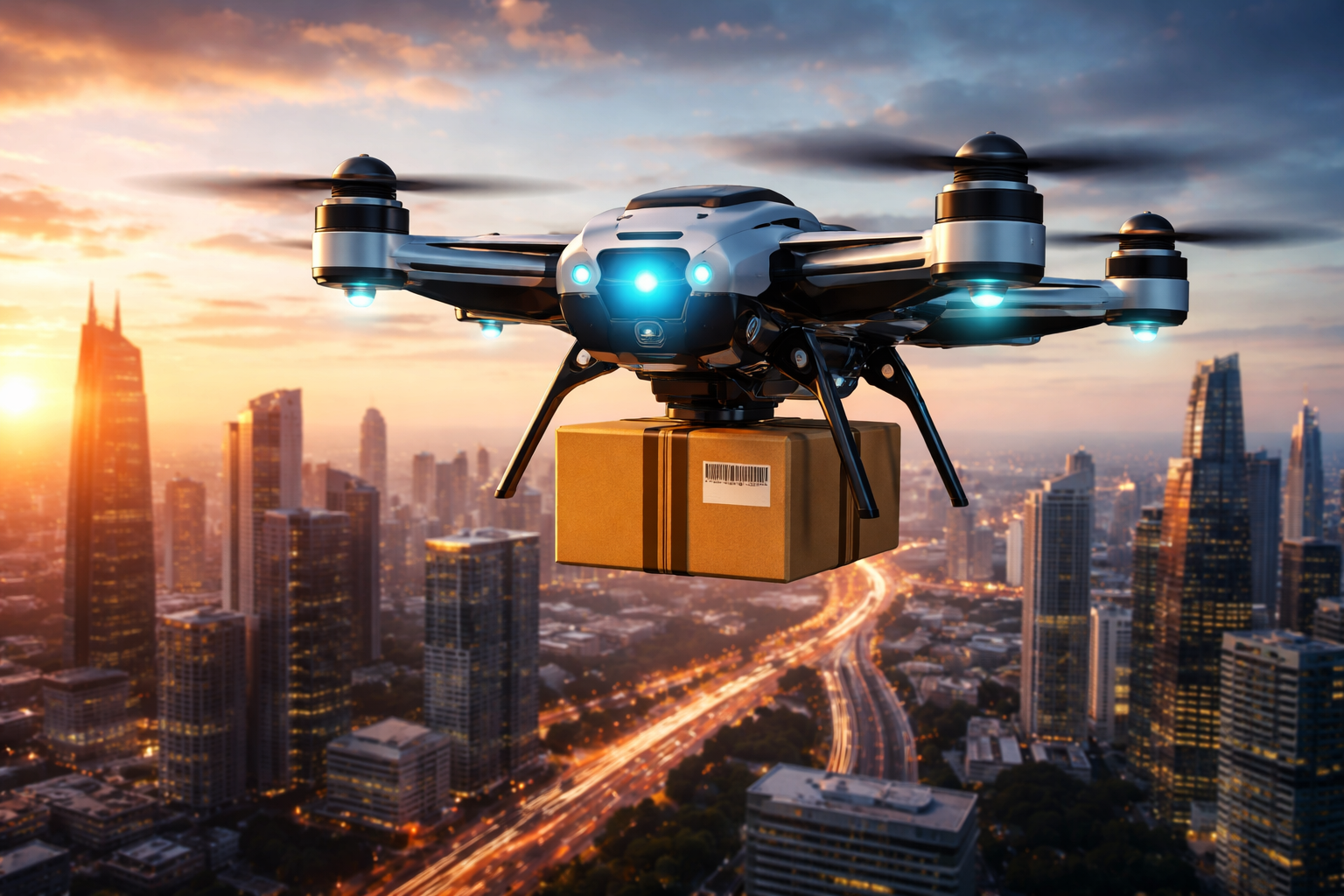
The global drone industry is undergoing a major transformation in 2026, driven by rapid advancements in artificial intelligence and autonomous navigation systems. What was once considered experimental is now becoming mainstream, as companies deploy AI-powered drones for delivery, surveillance, agriculture, and emergency response.
This shift is not just technological—it represents a fundamental change in how goods, data, and services move across the world.
Stay updated with the latest technology news as innovations like drones redefine industries.
The Acceleration of AI-Powered Drone Delivery
In 2026, AI-powered drones are scaling faster than ever before. Logistics giants and startups alike are investing heavily in autonomous aerial delivery systems capable of transporting goods in minutes instead of hours.
Unlike earlier drone models, today’s systems use advanced machine learning algorithms to:
- Navigate complex urban environments
- Avoid obstacles in real-time
- Optimize delivery routes dynamically
This evolution has made drone delivery viable for dense cities, rural areas, and even disaster zones.
Companies are now testing fully autonomous last-mile delivery, reducing reliance on human drivers and cutting operational costs significantly.
Why 2026 Is a Breakthrough Year for Drones
Several factors have converged to make 2026 a defining year:
1. AI Integration at Scale
Modern drones are powered by onboard AI chips, enabling real-time decision-making without cloud dependency.
2. Regulatory Progress
Governments across the US, Europe, and Asia have begun approving commercial drone corridors, accelerating adoption.
3. Battery and Hardware Improvements
Longer flight times and improved payload capacities have removed key limitations.
4. Enterprise Adoption
Industries like logistics, agriculture, and security are now deploying drones at scale—not just experimenting.
Regulatory frameworks such as FAA drone regulations are enabling safe commercial drone deployment.
Beyond Delivery: Expanding Use Cases
While delivery is the headline trend, drones are rapidly expanding into other sectors.
Smart Surveillance
AI drones are now used for:
- Border monitoring
- Infrastructure inspection
- Urban security
These drones can analyze video feeds in real time, identifying threats or anomalies instantly.
Agriculture Automation
Farmers are using drones for:
- Crop monitoring
- Precision spraying
- Soil analysis
This reduces waste and increases yield, making agriculture more efficient and sustainable.
Disaster Response
Drones are playing a critical role in:
- Search and rescue missions
- Delivering medical supplies
- Assessing damage in real time
In remote or hazardous environments, drones are often faster and safer than traditional methods.
Organizations like NASA drone research programs are exploring drones for emergency and planetary missions.
Challenges Slowing Mass Adoption
Despite rapid progress, several challenges remain:
Air Traffic Management
As drone numbers increase, managing low-altitude airspace becomes complex. Governments are working on unified traffic management systems.
Privacy Concerns
The use of drones for surveillance raises ethical and legal questions, particularly in urban environments.
Infrastructure Requirements
Drone delivery requires:
- Landing zones
- Charging stations
- Integration with logistics systems
These infrastructures are still being developed in many regions.
The Role of AI in Drone Evolution
Artificial intelligence is the backbone of modern drone systems. Key AI capabilities include:
- Computer Vision: Enables drones to “see” and interpret surroundings
- Predictive Analytics: Optimizes routes and delivery times
- Autonomous Decision-Making: Allows drones to operate without human control
As AI models continue to improve, drones will become even more reliable and efficient.
Similar to how AI is transforming drones, the rise of AI assistants replacing apps is reshaping user interaction across devices.
Global Market Outlook
The drone market is projected to grow exponentially over the next few years. Analysts predict:
- Massive expansion in last-mile delivery
- Increased adoption in developing countries
- Integration with smart city infrastructure
By 2030, drones could become a standard part of daily logistics operations worldwide.
What This Means for Businesses
For businesses, the rise of AI drones presents both opportunities and challenges:
Opportunities
- Faster delivery times
- Reduced operational costs
- Access to remote markets
Challenges
- Initial investment costs
- Regulatory compliance
- Integration with existing systems
Companies that adopt early are likely to gain a competitive advantage.
These advancements build on broader innovations in AI navigation systems across industries.
The Future of Autonomous Drones
Looking ahead, the next phase of drone evolution will focus on:
- Fully autonomous drone fleets
- Integration with IoT ecosystems
- Swarm intelligence for coordinated operations
The combination of AI, connectivity, and automation will redefine how industries operate.
Conclusion
The rise of AI-powered drones in 2026 marks a turning point in global technology. From delivery to surveillance and beyond, drones are becoming smarter, faster, and more reliable.
As infrastructure and regulations continue to evolve, autonomous drones are set to become a core component of modern life—transforming industries and reshaping the global economy.