


Last Updated on April 7, 2026 by admin
Introduction
Transporting heavy cargo across extreme terrains such as mountains, forests, deserts, and disaster-hit zones has always been one of the biggest logistical challenges in modern transportation systems. Traditional solutions like helicopters and ground vehicles are often expensive, slow, and risky—especially in harsh weather or inaccessible landscapes.
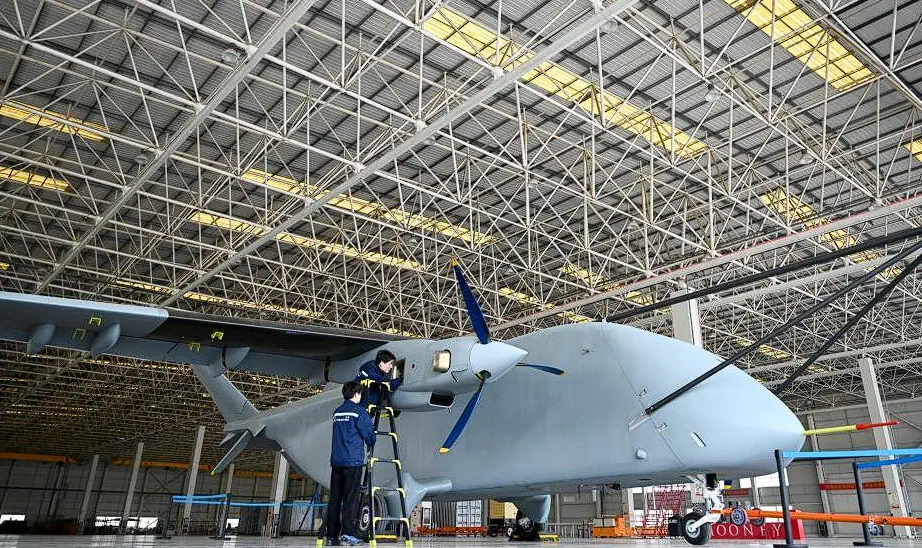
Now, China is pushing the boundaries of aviation technology by testing a heavy cargo drone designed specifically for extreme terrain operations. This development represents a major leap in unmanned aerial vehicle (UAV) logistics, potentially transforming how goods, emergency supplies, and critical materials are transported in the future.
With growing global competition in drone technology and increasing demand for rapid, low-cost delivery systems, this innovation signals a shift toward fully autonomous aerial logistics networks.
What Is China’s Heavy Cargo Drone?
China’s latest heavy cargo drone test highlights how rapidly autonomous aviation is reshaping logistics and industrial transport systems. This development fits into a broader innovation trend across internal drone technology updates and AI-powered aviation systems on TechKip. Readers can also explore more related coverage in our sections on advances in drone delivery systems, future transport innovations, and emerging autonomous logistics technologies, which together show how unmanned aerial systems are becoming a core part of next-generation infrastructure.
The newly tested drone is a large-scale unmanned aerial vehicle (UAV) engineered to carry significant payloads across long distances and difficult environments. Unlike small commercial delivery drones used for food or medical parcels, this system is designed for industrial-grade logistics operations.
Its primary focus includes:
- Heavy cargo transportation
- Remote area supply delivery
- Disaster relief missions
- Military and emergency logistics support
The drone is built to operate in regions where roads are non-existent or unusable, making it highly valuable for mountainous regions, border zones, and disaster-struck areas.
This development is part of China’s broader strategy to strengthen its low-altitude economy, a fast-growing sector involving drones, UAV traffic systems, and autonomous aviation technologies.
Key Features and Expected Capabilities
Although full technical specifications are not always publicly released, heavy cargo drones of this category typically include several advanced features.
1. High Payload Capacity
The drone is designed to carry substantial cargo loads, far beyond standard delivery UAVs. This enables transportation of:
- Medical equipment
- Emergency food and water supplies
- Industrial tools and spare parts
- Communication infrastructure equipment
2. Extended Flight Range
One of the most important features is its ability to operate over long distances without frequent recharging or refueling. This is crucial for reaching isolated regions.
3. Autonomous Flight System
The drone is powered by advanced AI-based navigation systems that allow:
- Autonomous route planning
- Obstacle detection and avoidance
- Real-time flight adjustments based on weather and terrain
4. Extreme Terrain Adaptability
The UAV is engineered to function in:
- High-altitude mountain zones
- Forested and uneven landscapes
- Desert environments
- Harsh weather conditions such as strong winds or fog
5. Vertical Takeoff and Landing (VTOL)
Most heavy cargo drones use VTOL capability, allowing them to operate without runways—an essential feature for remote missions.
Why Extreme Terrain Drones Matter
Extreme terrain logistics is one of the most expensive and risky parts of global supply chains. Traditional transportation methods face multiple limitations:
- Helicopters require high fuel and maintenance costs
- Ground vehicles cannot reach remote or disaster-affected zones
- Weather conditions often delay critical deliveries
Heavy cargo drones solve these issues by offering:
- Faster deployment times
- Lower operational costs
- Reduced human risk
- Increased accessibility
In disaster scenarios such as earthquakes or floods, drones can deliver life-saving supplies within hours instead of days.
China’s Growing Drone Industry Strategy
China has been rapidly expanding its UAV and aerospace capabilities over the past decade. This new heavy cargo drone test is part of a larger national push toward innovation in aerial mobility.
The Low-Altitude Economy
China is heavily investing in what is known as the low-altitude economy, which includes:
- Commercial drones
- Urban air mobility systems
- Autonomous cargo aircraft
- Drone traffic management systems
This ecosystem aims to integrate drones into everyday logistics and industrial operations.
Role of Aerospace Organizations
Major organizations such as the Aviation Industry Corporation of China (AVIC) and several private aerospace companies are actively involved in UAV development. These institutions are working on both civilian and dual-use technologies.
Real-World Applications of Heavy Cargo Drones
The potential applications of such drones are vast and extend far beyond simple cargo delivery.
1. Disaster Relief Operations
After earthquakes, landslides, or floods, infrastructure is often destroyed. Cargo drones can:
- Deliver food and water
- Transport medical teams and supplies
- Provide communication equipment
2. Remote Medical Supply Delivery
Hospitals in rural or mountainous areas often struggle with supply shortages. Drones can ensure:
- Timely delivery of medicines
- Emergency surgical equipment transport
- Vaccination supply chains
3. Industrial Logistics in Remote Areas
Mining, oil, and construction industries operating in remote regions can benefit from:
- Equipment delivery
- Spare parts transportation
- Emergency repair logistics
4. Military and Strategic Use
While civilian use is the focus, heavy cargo drones also have defense applications:
- Border supply missions
- Remote base resupply
- Surveillance support operations
These advancements are not happening in isolation, as global aviation authorities and industry leaders are actively shaping the future of unmanned aerial logistics. Organizations such as the International Civil Aviation Organization (ICAO) are working on regulatory frameworks for integrating drones into shared airspace. Meanwhile, companies like DJI, a global leader in commercial drone manufacturing, continue to push UAV innovation at scale. Real-world deployment examples such as the Zipline medical drone delivery system demonstrate how autonomous cargo networks are already operating in critical healthcare logistics. Broader insights from the World Economic Forum (WEF) further highlight how autonomous supply chains and drone-based transport systems are expected to redefine global trade and emergency response in the coming years.
Comparison With Traditional Transport Systems
Heavy cargo drones offer several advantages over conventional systems:
Helicopters vs Cargo Drones
- Helicopters: expensive fuel, high maintenance, pilot risk
- Drones: autonomous, lower operational cost, no onboard crew required
Trucks vs Cargo Drones
- Trucks: dependent on road infrastructure
- Drones: bypass terrain limitations completely
Aircraft vs Cargo Drones
- Aircraft: require airports and runways
- Drones: VTOL capability allows flexible deployment
This positions cargo drones as a hybrid solution between aviation and logistics automation.
Global Competition in Cargo Drone Technology
China is not alone in this field. Several countries and companies are actively developing similar systems.
United States
- Focus on military logistics drones
- Private companies developing autonomous delivery UAVs
Europe
- Strong emphasis on regulatory frameworks and urban air mobility
- Testing cargo drone integration into civilian airspace
Commercial Innovators
Companies inspired by models like medical delivery drone systems are exploring scalable logistics solutions for rural and urban regions.
However, China’s advantage lies in large-scale manufacturing capability and rapid deployment testing environments.
Challenges and Limitations
Despite the promising future, several challenges remain:
1. Airspace Regulation
Integrating large drones into civilian airspace requires strict regulatory frameworks to avoid collisions and disruptions.
2. Cybersecurity Risks
As drones become more autonomous, risks of hacking or signal interference increase.
3. Weather Dependency
Although designed for extreme terrain, severe weather conditions can still affect performance.
4. Infrastructure for Drone Operations
Landing zones, charging stations, and monitoring systems need to be developed at scale.
5. High Development Costs
Advanced UAV systems require significant investment in research, testing, and production.
The Future of Autonomous Cargo Logistics
The development of heavy cargo drones marks the beginning of a new logistics revolution. In the near future, we may see:
- Fully autonomous drone delivery networks
- AI-controlled supply chain systems
- Hybrid logistics combining drones, trucks, and autonomous vehicles
- Real-time global cargo tracking via UAV fleets
As technology advances, drones could become a standard part of global logistics infrastructure, especially in regions where traditional transport is inefficient or impossible.
Conclusion
China’s testing of a heavy cargo drone designed for extreme terrain highlights a major milestone in aerospace and logistics innovation. While still in its development and testing phase, the technology shows strong potential to transform disaster response, industrial logistics, and remote area connectivity.
However, challenges such as regulation, cybersecurity, and scalability must still be addressed before widespread adoption becomes a reality.
One thing is clear: the race for autonomous cargo aviation is accelerating rapidly, and drones may soon redefine how the world moves goods across even the most difficult environments.
The big question remains—are heavy cargo drones the future of global logistics, or just a stepping stone toward fully autonomous air transport systems?
FAQ Section
It is a large unmanned aerial vehicle designed to transport heavy loads across extreme terrains like mountains and remote regions.
It is mainly used for logistics, disaster relief, medical supply delivery, and remote area transportation.
In some use cases, yes. They are cheaper, safer, and can operate without pilots, but helicopters still have wider flexibility for now.
It is built for extreme terrain operations and can fly autonomously in areas where roads or airports are unavailable.
They are expected to become part of global autonomous logistics systems for fast and low-cost delivery.
Source