


Last Updated on July 30, 2026 by admin
Wearable Computing Is Entering a New Era
For more than a decade, smartphones have been the primary gateway to digital life. They help people communicate, work, navigate, shop, capture photos, and access information almost instantly.
However, technology companies are increasingly exploring a future where digital experiences become more natural and less dependent on constantly looking at a handheld screen.
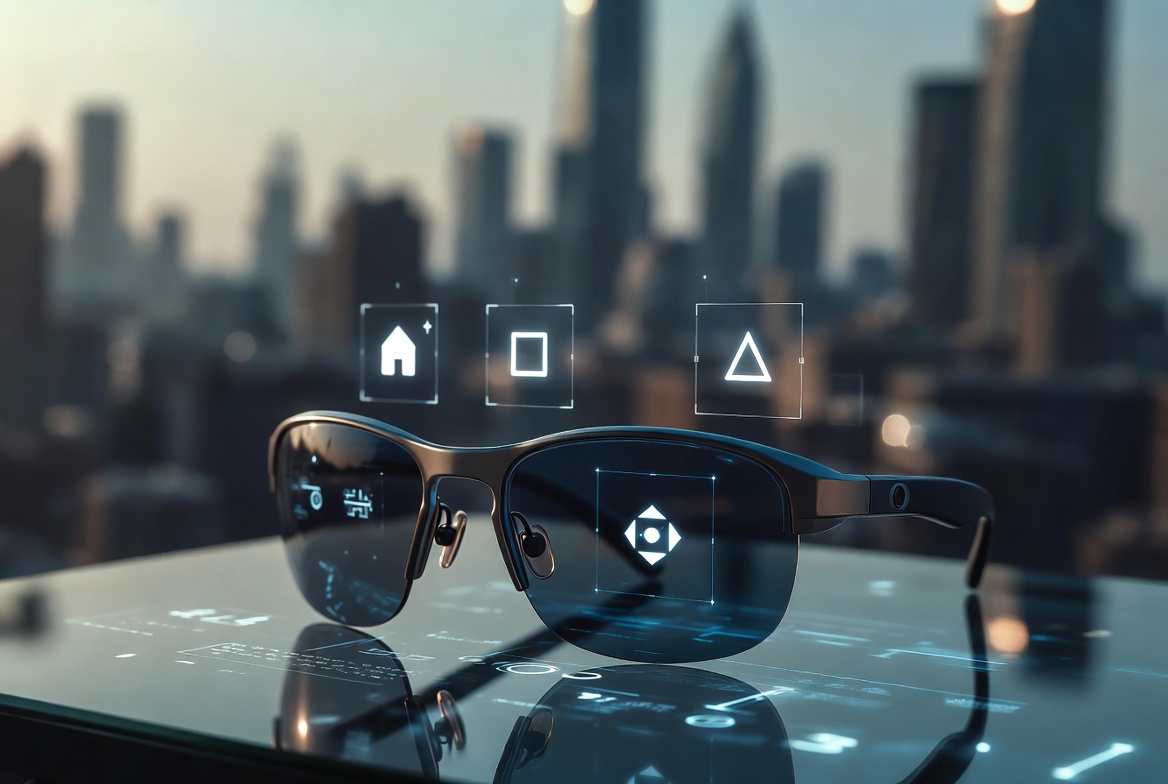
AI-powered smart glasses are emerging as one of the most promising wearable technologies capable of blending digital information with everyday life. Instead of replacing smartphones overnight, these devices are expected to complement existing mobile technology while introducing new ways to interact with digital content.
Recent advances in artificial intelligence, lightweight processors, computer vision, voice recognition, and battery efficiency are making smart glasses more practical than earlier generations.
👓 Wearable Technology Snapshot: Key Takeaways
- AI smart glasses are becoming increasingly practical for everyday use.
- On-device AI enables faster responses while improving privacy.
- Smart glasses may complement smartphones rather than replace them.
- Advances in processors, sensors, and batteries continue improving wearable technology.
Improvements in wearable devices also depend on continued progress in energy storage. TechKip recently examined this in Quantum Batteries Could Revolutionize Electric Vehicles and Smartphones, highlighting how future battery technologies may benefit compact consumer electronics.
Why Smart Glasses Are Returning
Early smart glasses introduced exciting ideas but often struggled with limited battery life, bulky designs, and immature software.
Today’s devices benefit from major advances in several technologies, including:
- Artificial intelligence
- Edge computing
- Voice assistants
- Computer vision
- Lightweight displays
- Energy-efficient processors
- Improved wireless connectivity
Android XR is Google’s platform for extended reality devices, supporting the development of next-generation smart glasses and immersive wearable experiences.
Together, these improvements allow modern smart glasses to deliver more useful and intuitive experiences than previous generations.
AI Is the Technology Behind the Experience
Artificial intelligence has become the foundation of next-generation wearable computing.
Qualcomm continues developing Snapdragon XR platforms that power many modern extended reality and wearable computing devices.
Instead of requiring users to manually search for information, AI systems can interpret voice commands, recognize objects, translate conversations, summarize notifications, and provide contextual assistance in real time.
Many of these capabilities increasingly operate directly on wearable devices, reducing dependence on cloud processing while improving responsiveness.
TechKip recently explored this trend in How On-Device AI Is Redefining Smartphones Without Sending Your Data to the Cloud, explaining how local AI processing improves speed, privacy, and responsiveness without relying entirely on remote servers.
This allows smart glasses to feel more like intelligent assistants than simple display devices.
Everyday Uses Continue Expanding
Imagine walking through an unfamiliar airport while your smart glasses display turn-by-turn navigation, translate signs into your preferred language, and notify you of a gate change without needing to unlock your phone.
AI smart glasses are expected to support a wide variety of daily activities.
Potential applications include:
- Real-time language translation
- Navigation assistance
- Hands-free messaging
- Live meeting transcription
- Travel guidance
- Accessibility support
- Remote collaboration
- Education
- Field service operations
Rather than introducing entirely new digital experiences, smart glasses may simplify many tasks people already perform using smartphones.
Smart Glasses vs Smartphones
| Smartphones | AI Smart Glasses |
|---|---|
| Handheld interaction | Hands-free interaction |
| Screen-based navigation | Voice and visual assistance |
| Pocket device | Wearable device |
| Manual information access | Context-aware information |
| Mature ecosystem | Emerging ecosystem |
Privacy Will Determine Public Acceptance
Despite rapid technological progress, privacy remains one of the biggest challenges facing wearable computing.
Smart glasses equipped with cameras, microphones, location services, and AI assistants must balance convenience with responsible data protection.
Manufacturers continue exploring privacy-focused features such as visible recording indicators, local AI processing, and stronger user controls to improve public confidence.
Trust will likely become just as important as technological innovation.
Smart Glasses Could Change the Modern Workplace
Beyond consumer applications, AI smart glasses are expected to play an increasingly important role in professional environments.
Engineers could receive hands-free repair instructions while working on complex equipment. Warehouse employees may view picking routes without carrying handheld scanners. Medical professionals could access critical information while keeping their attention focused on patients.
By presenting relevant information directly within the user’s field of view, smart glasses have the potential to improve productivity while reducing distractions.
As enterprise software becomes more AI-driven, wearable devices could become valuable productivity tools across many industries.
Accessibility Could Benefit Millions
One of the most promising uses of AI smart glasses is improving accessibility.
IEEE publishes research covering wearable computing, artificial intelligence, human-computer interaction, and emerging technologies that continue shaping the future of smart devices.
Future wearable devices may help people with visual or hearing impairments by providing:
- Real-time object recognition
- Instant language translation
- Live captioning
- Navigation assistance
- Text reading
- Voice-controlled interaction
Rather than replacing existing assistive technologies, AI smart glasses could complement them by making digital information more accessible in everyday situations.
Smart Glasses Will Connect With a Larger Technology Ecosystem
Future wearable devices are unlikely to operate independently.
Instead, they will increasingly communicate with smartphones, smartwatches, cloud platforms, vehicles, and smart home devices.
This interconnected ecosystem could allow users to begin a task on one device and continue it seamlessly on another without interrupting their workflow.
As wireless connectivity, edge computing, and AI continue improving, wearable devices may become an integral part of everyday digital life.
Shared Technologies Are Driving Multiple Innovations
Many of the technologies powering AI smart glasses are also accelerating progress in other emerging technologies.
Artificial intelligence, computer vision, advanced sensors, lightweight processors, and edge computing are now being integrated into drones, robots, and wearable devices alike.
These shared innovations are creating an increasingly connected technology ecosystem where devices cooperate rather than operate independently.
TechKip recently explored another example of this convergence in Autonomous Delivery Drones Could Transform How Goods Reach Your Doorstep, where AI, sensors, and autonomous navigation work together to improve next-generation logistics.
Challenges Still Remain
Although smart glasses have advanced significantly, several important challenges remain before they become mainstream consumer devices.
These include:
- Battery life
- Device weight
- Affordability
- Privacy concerns
- Display quality
- Application ecosystems
- Public acceptance
- Regulatory considerations in certain environments
Manufacturers continue investing in hardware miniaturization, energy efficiency, and artificial intelligence to overcome these obstacles.
As these improvements continue, smart glasses may become increasingly practical for both consumers and businesses.
TechKip Perspective
The future of wearable computing is unlikely to revolve around replacing smartphones overnight.
Instead, AI smart glasses represent the next step toward more natural and context-aware digital experiences.
Rather than requiring users to constantly reach for a phone, future wearable devices could quietly provide relevant information exactly when it is needed.
Success, however, will depend not only on technological innovation but also on thoughtful design, privacy protection, comfort, and user trust.
Companies that balance these factors effectively are likely to shape the next generation of wearable computing.
Final Thoughts
Smart glasses have evolved far beyond the experimental devices introduced more than a decade ago.
Meta Reality Labs continues researching wearable technologies, artificial intelligence, and augmented reality experiences designed to advance next-generation smart glasses.
Advances in artificial intelligence, edge computing, lightweight hardware, and energy-efficient processors are making wearable computing increasingly practical for everyday use.
While smartphones will remain essential for years to come, AI-powered smart glasses are emerging as an important complementary platform capable of transforming communication, productivity, navigation, accessibility, and digital interaction.
The future of computing may not replace the smartphone—it may simply allow people to interact with technology more naturally through the devices they wear every day.
Rather than replacing existing devices, AI smart glasses are likely to become another important screen in an increasingly connected technology ecosystem.
Frequently Asked Questions
AI smart glasses are wearable devices that combine displays, cameras, microphones, sensors, and artificial intelligence to provide contextual digital information and hands-free interaction.
Most industry experts expect smart glasses to complement smartphones rather than completely replace them in the foreseeable future.
Potential advantages include hands-free computing, real-time translation, navigation, accessibility support, voice interaction, and contextual AI assistance.
Battery life, comfort, affordability, privacy, display technology, and application ecosystems remain important challenges before widespread adoption.