


Introduction
For the first time in more than 50 years, humans have witnessed the hidden side of the Moon in stunning detail.
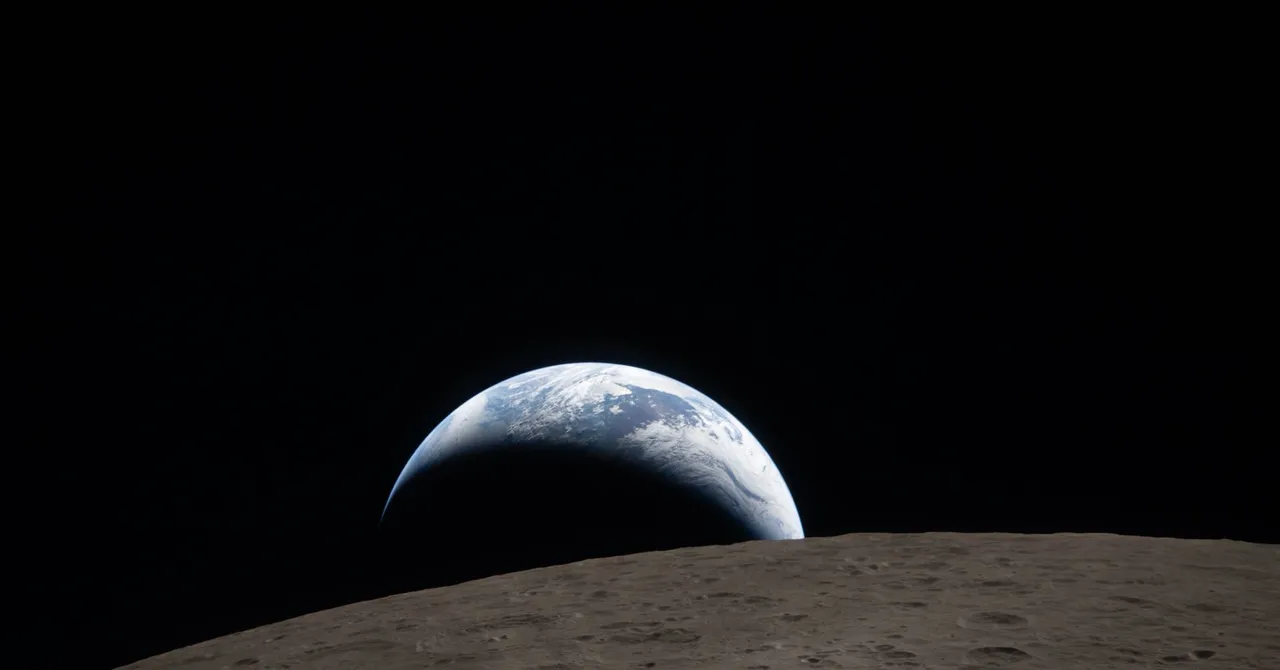
Artemis II, NASA’s first crewed mission around the Moon since the Apollo era, has captured breathtaking images of the lunar far side along with a rare “Earthset” view—where Earth slowly disappears behind the Moon’s horizon. These visuals mark a historic moment in space exploration and offer a powerful glimpse into the future of deep-space travel.
👉 Artemis II is NASA’s first crewed mission to fly around the Moon in over 50 years. It captured rare images of the lunar far side along with a stunning Earthset view, marking a major milestone in human space exploration.
Unlike Apollo missions that showed Earthrise from lunar orbit, Artemis II delivers a completely new perspective—Earthset—highlighting just how far human space exploration has advanced.

During its journey around the Moon, Artemis II captured breathtaking views of the far side—an area rarely seen from Earth. According to detailed reports from the mission, these images reveal the Moon’s heavily cratered terrain and offer a rare glimpse of the “Earthset” phenomenon. Scientists are particularly interested in regions like the South Pole-Aitken basin, which could hold valuable resources for future missions and long-term human exploration.
Beyond the stunning visuals, these images provide valuable scientific insight into one of the Moon’s most mysterious regions—the South Pole-Aitken basin. This massive impact crater is one of the largest in the solar system and is believed to contain deposits of water ice hidden in permanently shadowed areas. Scientists are particularly excited about this possibility because water ice could be converted into drinking water, oxygen, and even rocket fuel for future missions. Studying this region through Artemis II helps researchers better understand how to support long-term human presence on the Moon.
Why the Far Side of the Moon Matters
Artemis II captured the first modern human-view images of the Moon’s far side, including a rare “Earthset” view of Earth disappearing behind the lunar horizon. These images mark a major milestone in deep space exploration and future lunar missions.
The far side of the Moon is drastically different from the side we see from Earth. It has a much more rugged surface filled with craters and fewer flat plains, making it scientifically unique. Because it never directly faces Earth, communication with spacecraft in this region is more complex and requires relay satellites. Despite these challenges, the far side holds critical clues about the Moon’s formation and the early history of our solar system. Exploring it in greater detail could unlock discoveries that reshape our understanding of planetary science.
Artemis II Mission Overview
- crewed flyby mission
- no landing (important clarification)
- testing Orion spacecraft systems
- preparation for Artemis III
What’s Next for Artemis Missions
Artemis II is just the beginning of NASA’s long-term vision for lunar exploration. The upcoming Artemis III mission aims to land astronauts on the Moon’s surface, marking humanity’s return after more than 50 years. Beyond that, future missions plan to establish a sustainable human presence, including potential lunar bases that could serve as stepping stones for Mars exploration. The data and experience gained from Artemis II will play a critical role in ensuring the success and safety of these ambitious missions.
After completing the flyby, Orion began its four-day journey back to Earth. If all goes according to plan, the capsule will enter the atmosphere on April 10 and splash down in the Pacific Ocean.
For a deeper understanding of the mission and its significance, you can explore detailed coverage and scientific insights from trusted sources explaining the far side of the Moon and NASA’s Artemis II objectives. These external insights provide additional context on how these discoveries could shape future lunar missions and space exploration strategies.
As humanity prepares to return to the Moon, missions like Artemis II remind us how much there is still to explore beyond our planet. The breathtaking views of the far side not only inspire curiosity but also open the door to new possibilities in space travel. If given the chance, would you travel to the Moon and witness Earth from this incredible perspective? Share your thoughts and join the conversation about the future of space exploration.
Would you travel around the Moon if given the chance to witness Earth like this from space?
FAQ SECTION
The far side of the Moon is the hemisphere that always faces away from Earth due to tidal locking, making it invisible from our planet.
Artemis II is the first crewed mission to travel around the Moon since 1972, testing systems for future lunar landings and deep space missions.
Earthset is a rare view of Earth setting behind the Moon’s horizon, similar to the famous Earthrise photo from Apollo 8.
No, Artemis II is a flyby mission designed to orbit the Moon and return safely to Earth while testing spacecraft systems.
They help scientists map the Moon, study lunar resources like water ice, and prepare for future human missions and lunar bases.
Source