


Last Updated on April 17, 2026 by Michael Motha
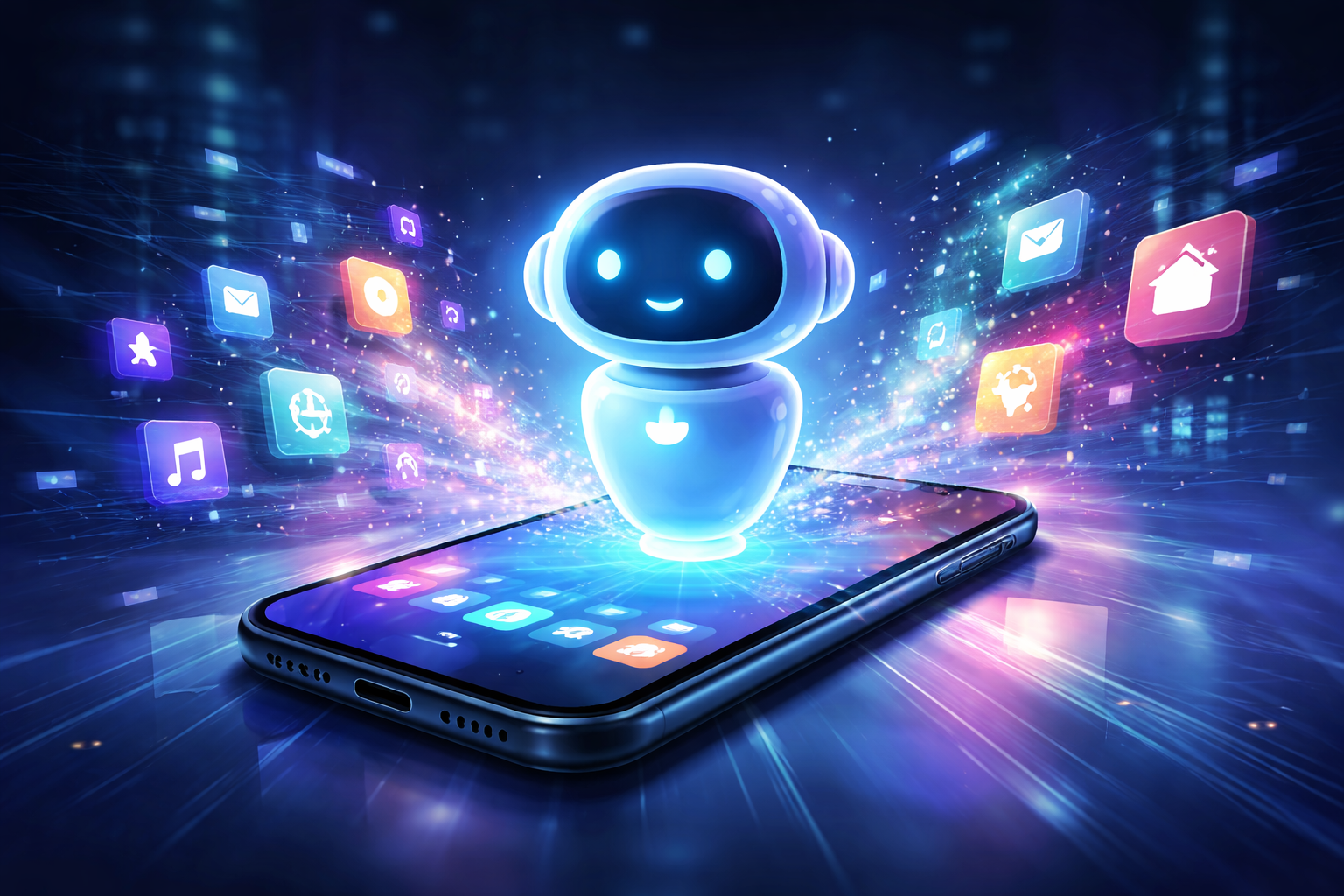
The way people interact with smartphones is undergoing a fundamental shift in 2026, as artificial intelligence assistants begin to replace traditional mobile apps. Instead of navigating multiple apps, users are increasingly relying on AI-driven systems to complete tasks more efficiently.
Companies like Apple and Google are leading this transformation, integrating advanced AI directly into their ecosystems.
AI Assistants Are Becoming the New Interface
For years, apps have been the primary way users interact with smartphones. However, AI assistants are now evolving into powerful interfaces capable of handling complex tasks through simple voice or text commands.
Instead of opening separate apps for messaging, booking, or searching, users can now ask AI to perform these actions seamlessly.
This shift is already visible in modern smartphones, as highlighted in the iPhone 17 AI features in 2026, where on-device intelligence is becoming a core part of user experience.
Why This Shift Is Happening Now
Several factors are driving this transition:
1. Improved AI Models
Modern AI systems can understand context, intent, and user preferences more accurately than ever before.
2. On-Device Processing
Companies are focusing on running AI directly on devices, improving speed and privacy.
This transformation is driven by rapid advancements in artificial intelligence, as seen in Google AI innovations, which continue to push the boundaries of what AI systems can achieve.
Smarter and Faster User Experience
AI assistants simplify everyday interactions by reducing the need for multiple steps. Users can:
- Book rides
- Send messages
- Search information
- Manage schedules
—all through a single interface.
This creates a smoother and more intuitive experience compared to traditional app navigation.
Impact on Mobile Apps
The rise of AI assistants does not mean apps will disappear entirely, but their role is expected to change.
Apps may become backend services that AI systems interact with, rather than tools users open directly.
This could reshape the entire mobile ecosystem, affecting developers, businesses, and users alike.
Latest 2026 Developments
Recent industry trends indicate that AI assistants are becoming deeply integrated into operating systems, with Apple and Google accelerating their AI strategies. As competition intensifies, companies are focusing on creating unified AI experiences that can handle multiple tasks without requiring users to switch between apps.
TechKip Analysis: A Major Shift in Digital Behavior
The transition from apps to AI assistants represents a significant change in how users interact with technology.
Rather than navigating interfaces manually, users are moving toward conversational interactions powered by AI. This shift could redefine user expectations and reshape the future of mobile computing.
What This Means for Users
For everyday users, this evolution brings several benefits:
- Increased convenience
- Faster task completion
- More personalized experiences
However, it also raises questions about privacy, control, and dependence on AI systems.
AI Assistants vs Apps: What Experts Are Saying
Industry experts believe the shift toward AI assistants is accelerating faster than expected in 2026. Many analysts suggest that instead of replacing apps entirely, AI will act as a unified layer that connects multiple services seamlessly. This means users may no longer need to switch between apps manually, as AI systems will handle interactions in the background.
Companies like Apple and Google are already investing heavily in this approach, signaling a long-term transition toward AI-first digital experiences.
What Comes Next
As AI continues to evolve, the role of assistants will likely expand further, potentially becoming the central hub for all digital interactions.
The coming years could see a world where apps operate behind the scenes, while AI assistants handle everything on behalf of users.