
Last Updated on June 14, 2026 by admin
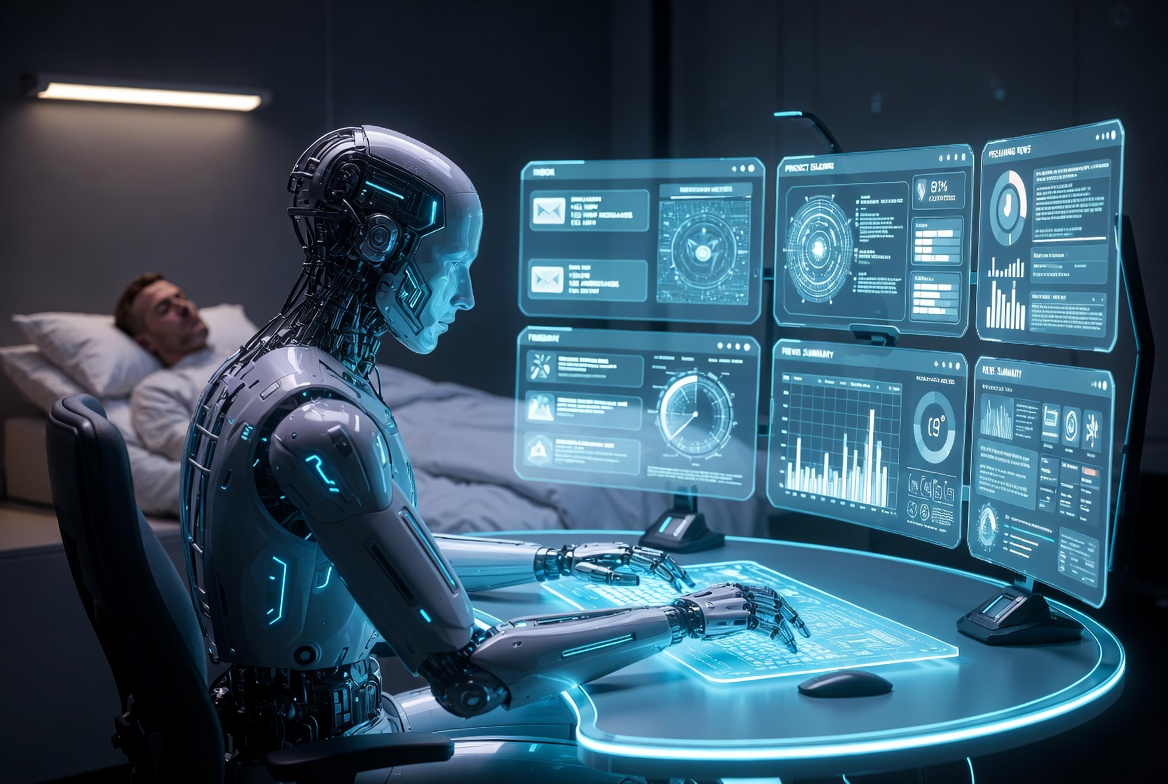
Imagine waking up tomorrow morning and discovering that a digital version of yourself has already replied to emails, summarized industry news, scheduled meetings, filtered messages, and prepared a personalized briefing for your day.
This may sound like science fiction, but the concept of AI digital twins is rapidly moving from research labs into real-world discussions. As artificial intelligence evolves beyond simple chatbots, technology companies are exploring systems capable of creating highly personalized AI representations of individuals.
Unlike traditional virtual assistants, AI digital twins are designed to understand how you think, communicate, and make decisions. Their goal is not simply to answer questions but to act on your behalf in specific situations.
The emergence of AI digital twins could become one of the most disruptive technology trends of the decade.
What Exactly Is an AI Digital Twin?
A digital twin is a virtual representation of a real-world object, system, or person.
In industrial settings, digital twins have been used for years to simulate factories, machines, and supply chains. Now artificial intelligence is bringing the concept closer to human experiences.
An AI digital twin could learn from your writing style, work habits, communication preferences, and decision-making patterns. Over time, the system may become capable of performing routine tasks in a way that closely resembles how you would perform them yourself.
This evolution builds upon the broader trend of artificial intelligence transforming workplace skills, as organizations increasingly deploy AI to enhance productivity rather than simply automate jobs.
Your Second Brain in the Cloud
Many technology leaders believe the future of AI will be deeply personalized.
Rather than interacting with generic assistants, users may work alongside AI systems trained on their own preferences and knowledge.
Research initiatives from OpenAI, Google AI, and Microsoft AI are increasingly focused on creating systems capable of understanding long-term context and user intent.
The result could be what some researchers describe as a “second brain” — an AI companion that remembers information, tracks objectives, and continuously learns from interactions.
Imagine asking:
“Review everything that happened in my business this week and prepare a summary.”
Your AI digital twin could already know which projects matter most to you, which clients require attention, and which opportunities deserve priority.
Why Wearables Could Accelerate the Trend
The growth of wearable technology may dramatically accelerate AI digital twin development.
Recent advances in AI-powered smart glasses suggest future devices may continuously collect contextual information about user activities, environments, and preferences.
Similarly, Google’s smart glasses prototype demonstrates how AI can become increasingly integrated into daily life, creating richer streams of personalised data that future digital twins could utilise.
Wearable devices may eventually become the sensory layer that helps AI understand the world through a user’s perspective.
The rapid advancement of wearable AI technology is creating new opportunities for personalized computing, allowing devices to collect contextual information that could significantly improve the capabilities of future AI digital twins.
The Productivity Revolution
One of the most exciting possibilities is productivity enhancement.
Rather than replacing workers, AI digital twins could eliminate repetitive administrative tasks.
Potential capabilities include:
- Drafting routine emails
- Summarizing meetings
- Monitoring industry developments
- Organizing research
- Prioritizing tasks
- Preparing daily briefings
For professionals overwhelmed by information overload, a trusted digital twin could function as a highly personalized productivity partner.
The Privacy Challenge Nobody Is Talking About
While the benefits appear impressive, digital twins introduce significant privacy questions.
How much information should an AI system be allowed to learn?
Who owns the digital twin?
Can users transfer their AI identity between platforms?
Cybersecurity experts and agencies such as CISA continue to emphasize the importance of protecting personal information as AI systems gain access to increasingly sensitive data.
The more capable digital twins become, the more important transparency, user control, and privacy protections will become.
The Future of Human-AI Collaboration
Many people assume the future of AI involves machines replacing humans.
A more realistic scenario may involve humans working alongside increasingly capable AI counterparts.
Your digital twin may not replace you.
Instead, it may handle routine digital activities while you focus on creativity, strategy, and decision-making.
Just as smartphones transformed communication and cloud computing transformed business operations, AI digital twins could fundamentally reshape how people interact with technology.
Many experts view AI digital twins as part of a broader wave of future technology innovations that will blur the boundaries between human intelligence and machine-assisted decision-making over the next decade.
The most fascinating aspect is that this future may arrive sooner than many expect.
The next major AI breakthrough may not be a smarter chatbot.
It may be a virtual version of you.
FAQ
An AI digital twin is a personalized AI system designed to learn an individual’s preferences, communication style, and work habits to assist with tasks and decision-making.
Early forms of personalized AI assistants exist today, but fully capable digital twins remain an emerging technology area.
Most experts expect them to enhance productivity by automating routine tasks rather than completely replacing human workers.
Digital twins may require access to large amounts of personal information, raising questions about data ownership, security, and user control.