


Last Updated on July 8, 2026 by Michael Motha
Only a few years ago, the idea of owning a personal robot seemed like science fiction.
Today, advances in artificial intelligence, robotics, computer vision, and cloud computing are bringing intelligent personal robots closer to everyday life than many people expected.
While fully autonomous household robots are still developing, technology companies around the world are investing heavily in robots capable of assisting with everyday activities, learning routines, interacting naturally with people, and performing increasingly useful tasks.
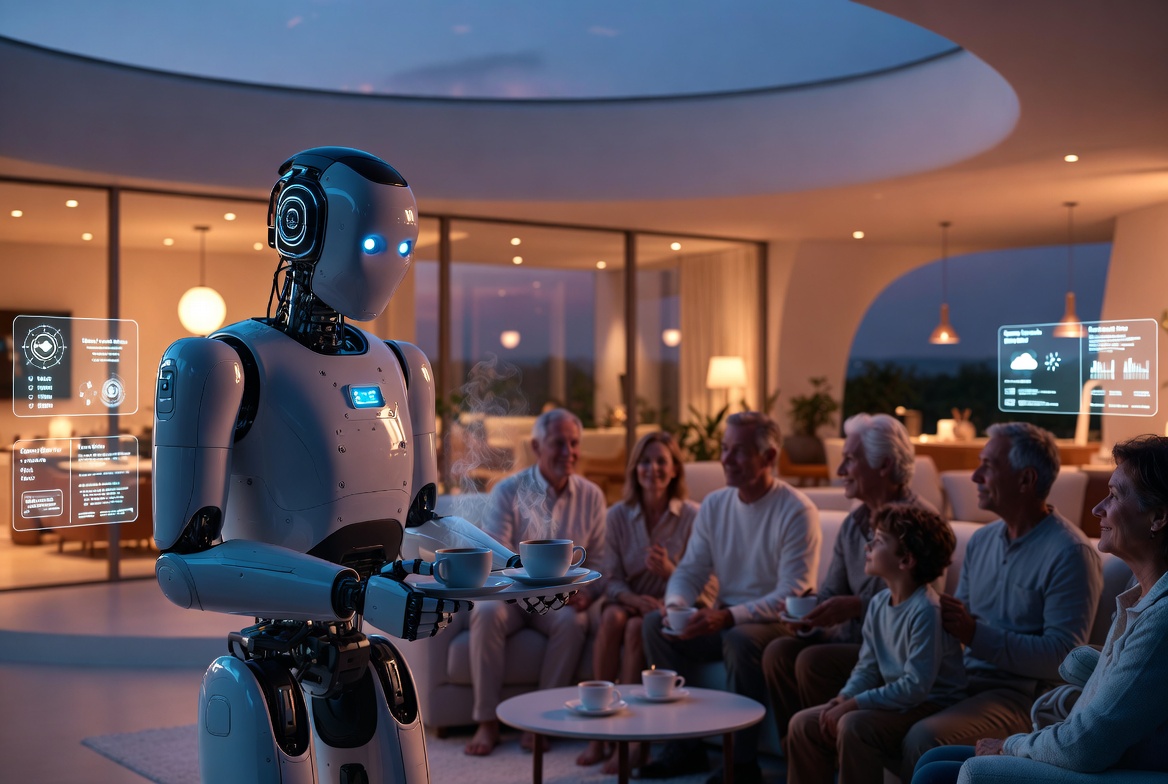
Rather than replacing people, the next generation of AI-powered robots is more likely to become intelligent assistants that help simplify everyday life.
🚀 Future Technology Snapshot: Key Takeaways
- AI is making personal robots more capable than ever before.
- Advances in robotics, cloud computing, and computer vision are accelerating innovation.
- Future home robots are expected to assist rather than replace people.
- Safety, affordability, and trust remain the biggest challenges before widespread adoption.
Why Robotics Is Entering a New Era
Industrial robots have existed for decades, primarily working inside factories where they perform repetitive, highly specialized tasks.
Companies such as Boston Dynamics have demonstrated how advanced robotics can achieve remarkable mobility and balance, showcasing technologies that continue influencing the broader robotics industry.
Personal robots represent a completely different challenge.
Unlike factory robots operating in controlled environments, household robots must navigate unpredictable spaces, recognize objects, understand human instructions, and interact safely with families.
Recent improvements in generative AI and machine learning have significantly improved robots’ ability to understand language, adapt to changing situations, and learn from experience, making personal robotics more practical than ever before.
As explored in TechKip’s AI Digital Twins: Your Virtual Self Could Be the Future of Work, increasingly personalized AI systems could eventually work alongside personal robots, helping them understand user preferences and deliver more customized assistance.
Why Artificial Intelligence Changes Everything
Traditional robots followed carefully programmed instructions.
Modern AI-powered robots can interpret spoken language, identify objects using computer vision, respond to changing environments, and improve their performance through continuous learning.
NVIDIA Robotics continues to develop AI platforms that enable robots to perceive their surroundings, learn complex tasks, and operate more intelligently across various environments.
These intelligent capabilities depend heavily on scalable computing resources. TechKip recently explained this in Why AI Is Triggering the Biggest Cloud Computing Race in History, highlighting how cloud infrastructure is becoming the foundation for next-generation AI applications.
Instead of being programmed for every possible situation, future robots are expected to make informed decisions based on context while remaining under human supervision.
This shift allows robots to become significantly more flexible than previous generations of automation.
What Could Future Home Robots Actually Do?
Many people imagine robots performing every household chore.
The reality will likely be much more practical.
Future personal robots may assist with:
- Organizing daily schedules
- Monitoring home safety
- Helping elderly family members
- Carrying household items
- Providing educational assistance
- Supporting people with disabilities
- Managing smart home devices
- Assisting with routine cleaning tasks
Rather than replacing human decision-making, these systems are expected to reduce repetitive work and improve convenience.
The Biggest Challenges Before Robots Become Common
Although AI-powered personal robots are advancing rapidly, several significant challenges remain before they become a common feature in households.
One of the biggest obstacles is affordability. Advanced robots combine sophisticated hardware, artificial intelligence, sensors, cameras, and high-performance processors, making them considerably more expensive than today’s smart home devices.
Reliability is another important factor. A household robot must consistently perform tasks safely in dynamic environments where children, pets, furniture, and unexpected situations are part of everyday life.
Privacy is equally critical. Since many personal robots will use cameras, microphones, and internet connectivity, manufacturers must demonstrate that user data is protected through strong security measures and transparent privacy controls.
As TechKip recently explained in Why Every Software Update Matters More Than Ever in the Age of AI-Powered Cyberattacks, keeping connected devices updated is becoming one of the most effective ways to protect personal data and reduce cybersecurity risks.
How AI Robots Could Transform Everyday Life
Rather than replacing people, personal robots are expected to complement human abilities by assisting with repetitive or physically demanding tasks.
In healthcare, they could remind patients to take medication, monitor wellness indicators, and assist healthcare professionals with routine support activities.
In education, intelligent robots may provide interactive tutoring, language learning assistance, and personalized educational experiences for students.
Within smart homes, they could coordinate connected appliances, monitor energy consumption, assist elderly family members, and improve accessibility for individuals with mobility challenges.
The long-term value of personal robots will likely depend not on replacing human interaction, but on supporting people in ways that improve convenience, independence, and quality of life.
ABB Robotics continues advancing intelligent automation technologies that demonstrate how AI and robotics can improve productivity across industries.
The Role of Cloud Computing Behind Intelligent Robots
Modern robots are becoming increasingly capable, but many of their most advanced features depend on cloud computing.
Instead of storing every AI model directly on the robot, cloud platforms allow robots to access more powerful computing resources, process complex information, and continuously receive software improvements.
This combination of onboard intelligence and cloud-based AI enables robots to become smarter over time without requiring completely new hardware.
Modern personal robots will increasingly rely on advanced cloud computing platforms to support complex AI capabilities.
TechKip Perspective
Personal robots should not be viewed simply as futuristic gadgets.
They represent the convergence of several technologies that have been developing independently for years, including artificial intelligence, robotics, cloud computing, computer vision, and edge computing.
The biggest transformation may not come from robots performing extraordinary tasks, but from quietly assisting people with everyday activities that consume time and attention.
As costs decrease and technology matures, personal robots could gradually become another connected device within the smart home ecosystem—much like smartphones, smart speakers, and smart TVs did over the past two decades.
Whether adoption happens quickly or gradually, the direction of innovation suggests that intelligent robotics will become an increasingly important part of future digital lifestyles.
Looking Ahead
Artificial intelligence is giving robotics capabilities that once existed only in science fiction.
Although widespread adoption will take time, the progress being made today indicates that personal robots are moving steadily from research laboratories into practical real-world applications.
For consumers, businesses, and technology enthusiasts, understanding this evolution provides valuable insight into how everyday life may change over the coming decade.
The future of robotics is not simply about building smarter machines—it is about designing technology that works naturally alongside people.
Frequently Asked Questions
Most experts expect personal robots to assist people with repetitive, routine, or physically demanding tasks rather than completely replace human workers.
As manufacturing scales and AI hardware becomes more efficient, personal robots are expected to become increasingly affordable over the next decade, although premium models will likely reach the market first.
Many advanced features—including AI processing, software updates, and continuous learning—benefit from cloud computing, although some functions can operate locally on the device.
Manufacturers continue developing safety systems, privacy protections, and human oversight mechanisms. Widespread adoption will depend on maintaining strong safety standards and user trust.