


Last Updated on September 7, 2026 by Michael Motha
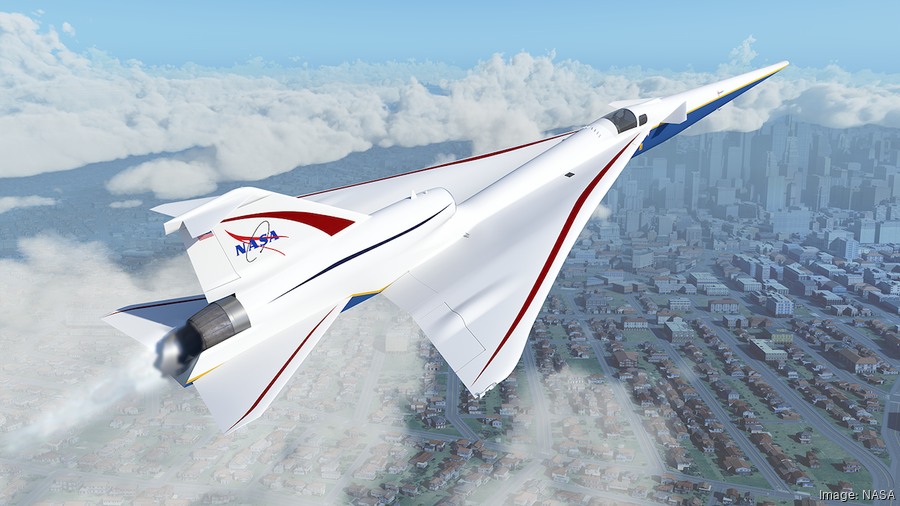
NASA’s X-59 quiet supersonic research aircraft is advancing through testing as the agency works to demonstrate whether supersonic travel over land can become significantly quieter. Developed in partnership with Lockheed Martin, the aircraft is powered by a single modified F414-GE-100 engine and is designed to reduce the noise generated during supersonic flight.
When an aircraft travels faster than the speed of sound, its shock waves can reach the ground as a sonic boom, producing a sudden and noticeable noise. While the Concorde demonstrated the potential of commercial supersonic travel, its high operating costs, fuel consumption and noise restrictions limited its commercial viability. While the Concorde demonstrated the potential of commercial supersonic travel, high operating costs, fuel consumption and restrictions on supersonic flight over populated areas limited its commercial viability and contributed to its retirement in 2003.
The X-59 uses an unusual configuration, including an engine mounted above the aircraft and a long, slender fuselage, as part of its approach to reducing the intensity of the sonic boom heard on the ground.
NASA’s research into sonic booms examines how shock waves form, travel through the atmosphere and affect people on the ground.
NASA’s aerospace programmes extend beyond experimental aircraft, with human spaceflight and long-duration missions also remaining major areas of research and development.
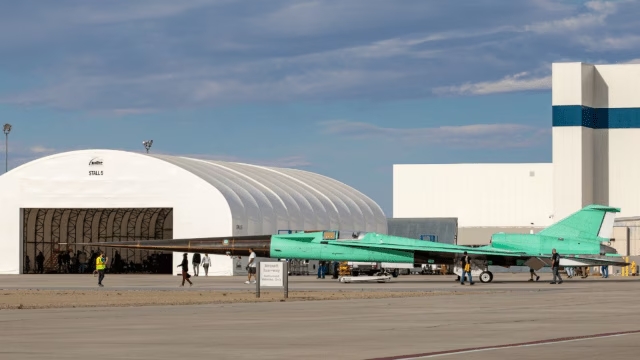
The X-59 is designed to cruise at around 55,000 feet (16,764 meters) and reach speeds of approximately Mach 1.4. The flight-test programme will allow NASA to evaluate the aircraft’s performance and collect data on its quieter supersonic design. These demonstrations are intended to gather data on how people perceive the aircraft’s sound, which could help inform future decisions about supersonic flight over land.
NASA’s flight programme will also examine how people on the ground perceive the X-59’s sonic thump compared with the sonic booms produced by conventional supersonic aircraft. The findings could help researchers evaluate whether the X-59’s approach could be applied to future aircraft operating over populated areas.
The X-59 has already reached several major milestones during its 2026 flight campaign. NASA reported that the aircraft completed its first supersonic flight in June, reaching about Mach 1.1, before later reaching Mach 1.4 at an altitude of 55,000 feet. By August, the aircraft had completed 25 test flights as NASA prepared to move toward acoustic validation of the quiet sonic thump it is designed to produce.
The programme’s findings could provide valuable evidence about how the aircraft’s design performs in real-world flight conditions. This could help researchers assess the potential of the technology for future aircraft. The findings could also provide useful information for regulators considering future rules for supersonic flight over land, particularly those related to aircraft noise.
NASA’s research is part of a broader effort to advance supersonic aviation, with private aerospace companies also pursuing commercial applications. Boom Supersonic has also advanced its supersonic aircraft programme with flight testing of its experimental XB-1 demonstrator. During its flight-test programme, the XB-1 demonstrated its ability to exceed Mach 1, providing useful data for the development of future supersonic aircraft. Its progress illustrates the continued interest in bringing supersonic passenger travel back to commercial aviation.
The X-59 is another example of how NASA research is pushing the boundaries of aerospace technology, alongside discoveries made through missions such as the James Webb Space Telescope.
NASA and Boom Supersonic are pursuing different approaches to advancing high-speed passenger travel. NASA is focused on reducing the noise of supersonic flight, while Boom Supersonic is pursuing commercial passenger aircraft capable of travelling faster than the speed of sound. The progress of programmes such as the X-59 and XB-1 will help determine how technical advances and regulatory changes could shape the future of supersonic passenger travel.
Boom Supersonic’s XB-1 demonstrator also completed supersonic testing, reaching Mach 1.122 during its first supersonic flight in January 2025.
NASA’s growing role in advanced scientific missions also includes major space exploration programmes such as Artemis II, which is testing technologies for future crewed missions beyond Earth orbit.
NASA confirmed that the X-59 completed its first supersonic flight in June 2026, marking a major milestone in the aircraft’s flight-test programme.
By September 2026, NASA reported that the X-59 had completed 25 test flights and was preparing for the next stage of testing focused on its quiet sonic thump.
NASA says the X-59 already flew supersonically for the first time on June 5, 2026, reaching approximately Mach 1.1. It subsequently reached its planned mission conditions of Mach 1.4 and 55,000 feet, and NASA reported 25 completed test flights by August 21.